
It’s been a pleasure to contribute ETF columns every quarter for the past five years. So much has changed since I first began using ETFs in my discretionary portfolios over 10 years ago, and in my writing, I have had the chance to consider the ETF space from many different angles, from portfolio construction to index methodologies, thematic investing and ESG.
In this, my last regular ETF column, I would like to highlight the importance of having a solid investment committee, to debate portfolio changes and “look under the hood” of the products we choose for our clients.
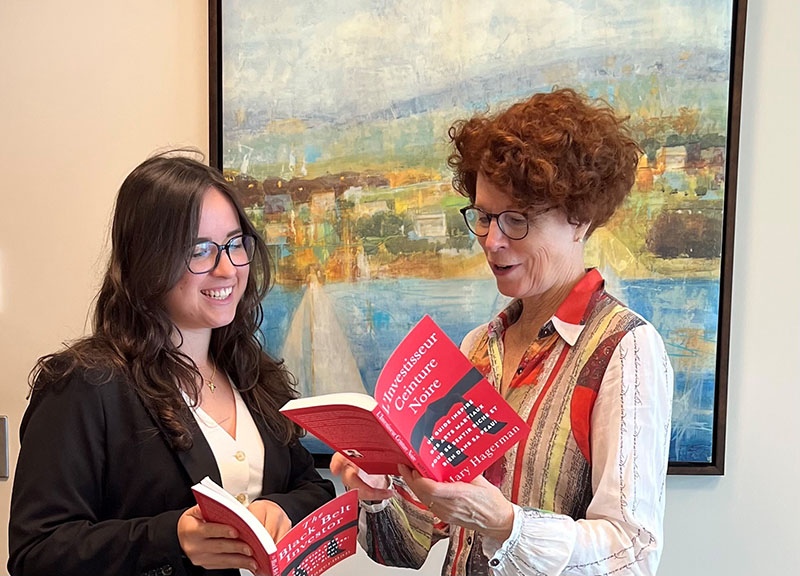
This year marks 10 years for my ETF-based discretionary portfolios. During that period, I’ve seen plenty of innovation and growth in this part of the financial industry.
I began using ETFs after the 2008-2009 global financial crisis. As I transitioned to fee-based and then discretionary portfolios in the years that followed, ETFs became my core investment holdings.

Life insurance is often viewed as a means of providing financial security for loved ones in the event of one’s passing. However, what many people may not realize is that life insurance policies can also serve as a strategic investment tool, offering a range of tax benefits that can enhance wealth accumulation and preservation.

Studies have shown that women make good investors. What's more, a study released by Fidelity Investments in 2021 found that investment accounts controlled by women outperformed those controlled by men by an average of 40 basis points over a 10-year period.
Yet the same study found that only 9% of women thought they made better investors than men.
Young people are often said to be the target market for ETFs, and many of them will have questions about this investing vehicle. For example, Meghan McCarthy, a third-year finance student at Bishop’s University, interned for me in Summer 2022. She had so many great questions about ETFs that we made our conversation a two-part series.
As young people embark on a lifetime of saving and investing, they need to understand the role of ETFs in the investment landscape. If we want to serve our clients’ children, we must be comfortable teaching the basics of investing.
I had the opportunity over the summer to hire Meghan McCarthy, a third-year finance student at Bishop’s University, as an intern. She told me she was curious about ETFs and didn’t really understand how they differed from mutual funds.
Here, I share her questions and my answers to help you understand what young investors need to know about ETFs.
The RESP my husband and I set up over 25 years ago has been instrumental in funding my children’s school expenses, in no small part thanks to my ETF portfolio investment strategy.
When I created my portfolios over 10 years ago, I used them across my family accounts for our investments. The children were still young and I adopted a dynamic investment profile for their RESPs. Since it would be several years before I intended to withdraw money from the account and I had the flexibility to wait out any market corrections, I was comfortable using a 100 per cent equities portfolio.
In my own money management practice, I experimented with many investment styles over the years before adopting an ETF strategy following the great financial crisis. As I explained in my last article, I found the simple fact that most active managers do not outperform their benchmark index very compellingly. From that point on, I worked with unwavering conviction to build portfolio models based on an ETF strategy.
I did not immediately embrace ETFs in the aftermath of the financial crisis. Few investors were familiar with them at the time and the selection was limited. But, as more financial data became available, I decided to create discretionary portfolios using primarily ETFs after realizing that the majority of the managed products did not beat their benchmarks over time.
In Canada, if you own publicly traded securities outside of a registered account that have increased in value since you purchased them, and you donate them in-kind to charity, you’ll realize even more tax savings than you would with a cash gift.
My personal experience tells me that using ETFs to create a charitable trust can allow you to give in a tax-efficient, strategic manner on a regular basis.
When talking to my clients about the worst-case scenario with investing in equities, I often use the 2008-2009 recession to illustrate that even if you invested right before the 14-month long bear market, most investors made their money back within four years if they just held on to what they owned.
There has been a proliferation of ESG product in the mutual fund and ETF space. Industry statistics now challenge the notion that investors must sacrifice performance to invest in these types of products. But even more important is the mounting concern that something has to be done to save the environment and to reckon with widespread social injustices.
Most investors cannot resist buying when stocks are high and selling when they are low. Each time that happens, money is left on the table. I have seen eight bear markets in my career as an investment advisor and portfolio manager, and can attest to the fact that emotions get the best of many investors when the markets start to tumble.
If you have been following my articles, you will know how I build my ETF portfolios and the type of ETFs I use: mostly plain vanilla broad indexes and rules-based construction.
This current crisis has been an opportunity to test my investment strategy, and I’m happy to report that my conviction in my portfolio management strategy has not wavered. That said, I’ll share some important observations about the equity markets (the issues affecting the bond market merit an article of their own).
Long before people were talking about factor investing, there was an interest in socially responsible investing (SRI) filters. In my practice, clients have been looking for environmentally friendly investments since long before the 2008 crash.
There were few options available at the time. Most were in the form of mutual funds and they were usually bought by the client, not sold by the advisor. Further, clients usually took the initiative to ask about SRI: they would ask if we could help them invest responsibly, and then we would look for product.
In the past 20 years, investment managers have identified upward of 200 different factors, which include everything from seasonality to a CEO’s gender. Although there is still debate about how to define a factor, the consensus is that there are five generally accepted factors that have been found to be persistent and repeatable over time: value, momentum, quality, size and minimum volatility.
There are two main reasons for using factor-based ETFs (also called smart-beta or rules-based strategies). Many portfolio managers feel, as I do, that factors can add alpha. Nobel Prize-winning research has shown that over time, some factors can outperform the broad-based market index. If you share this conviction, it makes sense to move beyond a market-capitalization strategy to build investment portfolios.
Over the years the ETF space has seen exceptional growth in factor-based products. I was an early adopter of “factor-based” or “rules-based” ETFs, which track indices that are constructed to choose securities based on attributes associated with higher returns. I was impressed with the Nobel Prize-winning research of Eugene Fama and Kenneth French. After analyzing the white paper on First Trust’s AlphaDEX index methodology, which is based on Fama and French’s work, I started using some of their factor-based ETFs in my portfolios as satellite positions for U.S. mid-cap (FNX) and European (EUR) exposure.
Mutual fund portfolio managers came under intense scrutiny in the aftermath of the global financial crisis as statistics revealed that an overwhelming majority of active portfolio managers were unable to outperform their benchmark indices over long periods. Specifically, more than 50% of active managers in the U.S. were unable to fare better than the broad U.S. Wilshire 5000 total market index even in bear markets — and especially from 2007 to 2009. These lacklustre results begged the question: Why was I placing my clients’ assets into mutual funds with higher management fees when a passive cap-weighted index-tracking ETF had a statistically significant chance of garnering better returns over time?
Of course, there always are exceptions to the rule, and some active managers do beat their benchmarks. This could certainly be the case for smaller, less liquid asset classes, such as emerging markets and preferred shares. But the reality is that most active managers with top-quartile performance one day no longer are top-quartile performers after a five-year period. Therefore, the lack of “persistent” performance using mutual funds was another compelling reason to make the transition to ETFs.